Artifacts
noun. /ahr-tuh-fakt/
An object remaining from a particular time or event.
Evidence of a system’s behavior that persists after the intent has faded.
Most industry writing focuses on how things are supposed to work. These files examine how they actually break. They are not tied to a calendar, because the tension between Capital and Capacity has no expiration date.

Ownership Ends at Launch, Accountability Does Not.
Most organizations treat ownership as something that expires.
A product launches.
A system goes live.
A capability is delivered.
At that moment, ownership is considered fulfilled.
What remains is accountability.
This distinction is rarely made explicit, but it shapes nearly every operational failure that follows.
Ownership is exercised upstream. Decisions are made under controlled conditions: timelines are negotiable, trade-offs are debated, assumptions are documented. Authority is present, and options exist.
Accountability, by contrast, emerges downstream. It appears after launch, when the system is live and consequences are no longer theoretical. Options narrow. Time compresses. The work is no longer about design or intent, but outcome.
Operations lives at this boundary.
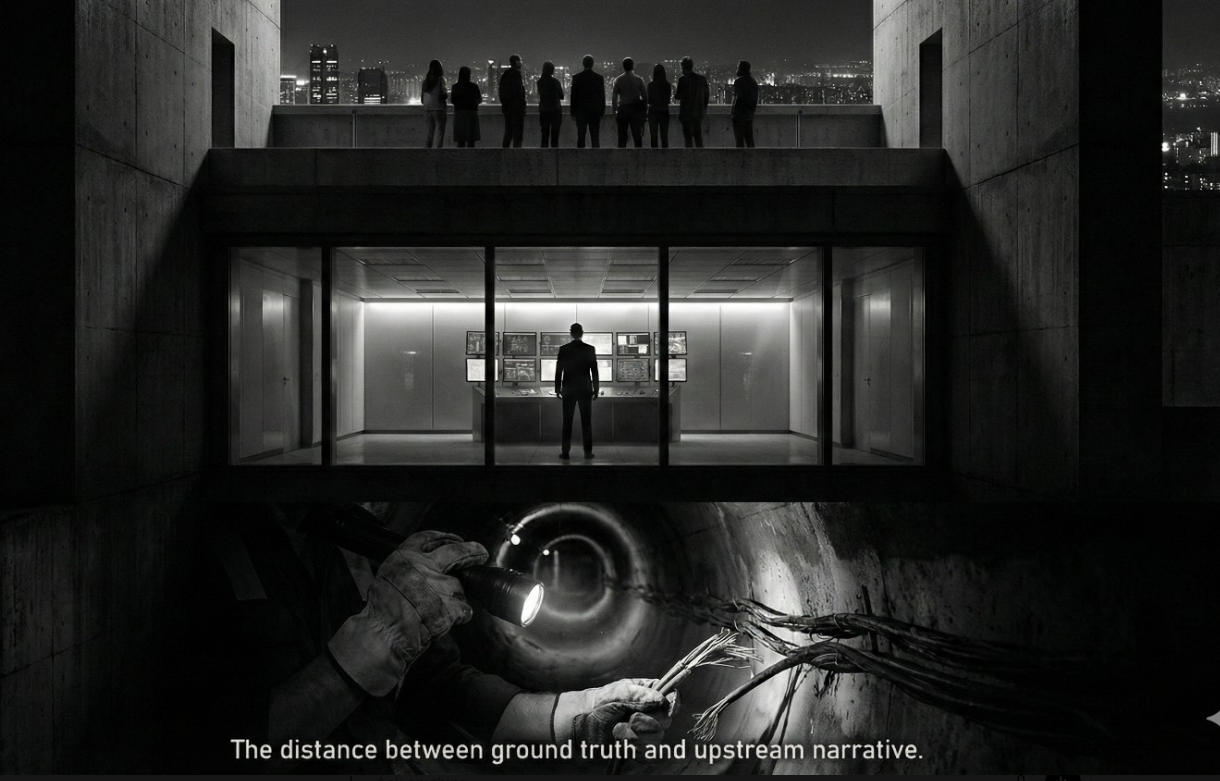
By the time work arrives in Operations, ownership has already dissolved. The system is no longer being shaped; it is being sustained. Decisions that defined its resilience, scalability, and tolerance for failure have already been made.
Yet accountability remains fully intact.
Operations is judged on availability, performance, and recovery. Metrics are tracked. SLAs are enforced. Customers experience impact in real time. The system does not care who made the original decisions — only that it continues to function.
This creates a structural asymmetry.
Those who exercised authority over design are no longer present when consequences surface. Those who are present when consequences surface lack the authority to change the underlying system.
Accountability without ownership becomes normalized.
This is not the result of malice or neglect. It is a function of how organizations distribute responsibility across time. Ownership is treated as a phase. Accountability is treated as a condition.
The handoff between the two is rarely examined.
Once a system is live, changes become expensive, risky, and politically complex. Preventive decisions that were optional upstream become difficult downstream. What could have been addressed deliberately must now be managed cautiously, under pressure, and often without full context.
Operations is asked to stabilize outcomes it did not design, defend costs it did not create, and explain failures that were structurally embedded long before the incident occurred.
And it must do so without assigning blame.
This is why operational conversations often feel constrained. Root causes are acknowledged carefully. Explanations are framed narrowly. The goal is not to revisit decisions, but to restore equilibrium.
The system rewards containment over correction.
Over time, this reinforces a quiet but persistent pattern: ownership ends at launch, while accountability accumulates indefinitely. Operations becomes the permanent interface between past decisions and present consequences.
Organizations that mature operationally recognize this mismatch.
They extend ownership beyond launch. They bind authority to lifecycle responsibility. They acknowledge that accountability without ownership is not accountability at all — it is exposure.
Until then, Operations will continue to carry responsibility for outcomes it was never empowered to shape.
Not because it failed.
But because it remained.
The Vantage Point Problem in Operations
How pressure distorts judgment, rewrites narratives, and quietly breaks teams
Service was restored in forty-five minutes.
By any operational benchmark, that should have been a win.
Instead, it became the moment a team quietly decided they would never push that hard again.
The outage was labeled self-inflicted. The phrase deserves quotation marks—not because responsibility doesn’t matter, but because in complex infrastructure environments, self-inflicted often means nothing more than being closest to the failure when the system finally gives way.
In this case, the damage occurred at a handhole. The field team was present. The fiber broke. The designation followed automatically.
What mattered less—at least in the official narrative—was that the plant had likely been compromised long before. Deferred quality. Marginal tolerances. Previous work done just well enough to pass. Any one of those can leave infrastructure hanging by a thread. Sometimes, opening the lid is enough.
The team knew how this would be read. And so they moved.
They didn’t slow down.
They didn’t wait for reinforcements.
They didn’t protect themselves.
They restored service in under an hour—an MTTR that typically stretches four to six.
They assumed effort would matter.
They were wrong.
Three Vantage Points. One Incident.
What followed wasn’t chaos. It was something far more predictable.
Everyone involved acted rationally based on the pressure they were under. The failure didn’t come from incompetence or malice. It came from what I’ll call vantage point compression.
Vantage point compression is what happens when pressure collapses perspective—when people stop optimizing for the system and start optimizing for the audience closest to their blast radius.
4
The Field: Where Reality Is Undeniable
From the ground, the situation was clear.
Nothing the team did rose to negligence. The same access methods had been used countless times without incident. There was no reckless act—just fragile infrastructure finally failing.
They also understood the downstream risk.
Once labeled self-inflicted, the incident would climb the escalation chain quickly. Leadership would feel it. The client would feel it. The story would harden before context could catch up.
So they optimized for what they could control: impact.
They reduced customer downtime.
They minimized blast radius.
They protected their leadership from a longer, uglier escalation.
There was no expectation of a bonus. In operations, that’s normal.
What they hoped for—quietly—was acknowledgment. A simple signal that speed mattered. That effort counted. That doing the hard thing under pressure was seen.
Recognition, in operations, isn’t a feel-good gesture.
It’s a performance accelerant.
And its absence is felt immediately.
Leadership: Where Optics Become Currency
The operations VP arrived on site to a very different reality.
Five hundred customers were down.
The outage was self-inflicted.
The escalation chain was already forming.
This leader had been hired for a reason. He came from the client side. He understood expectations. He had been told—explicitly—that it was time to bring discipline, restore confidence, and elevate the organization’s standing.
In that moment, explanation was a liability.
What mattered was signaling:
That the issue was taken seriously
That accountability would follow
That leadership was not “soft”
The audience was not the field team.
It was upstream.
So the response became performative. Voices raised. Consequences implied. Control asserted.
From that vantage point, this wasn’t cruelty.
It was credibility management.
The Client: Where Reassurance Beats Diagnosis
From the client’s perspective, the pattern was wearing thin.
Self-inflicted outages were happening too often. Root causes blurred together. Infrastructure decay was understood—but patience was limited.
When the notification arrived, the first question wasn’t how fast was it fixed?
It was was this preventable?
Once the answer came back as “yes,” what followed was almost automatic.
They needed to see action.
They needed to believe control was being reasserted.
They needed the narrative to stabilize.
Someone had to own the failure—even if the system itself was the real culprit.
Where the System Quietly Breaks
None of this required bad intentions.
Each group optimized for survival within its own pressure envelope. And that is precisely the problem.
When effort is punished under ambiguity, systems don’t become safer.
They become quieter.
The team didn’t revolt.
They didn’t escalate.
They didn’t argue.
They adjusted.
Next time, they would follow procedure exactly.
No extra push.
No personal stretch.
No unrecognized effort.
Compliance would replace care.
The irony is familiar to anyone who’s worked in operations long enough: the people most capable of reducing MTTR and absorbing shock were just taught that initiative carries risk but no upside.
Dashboards may stay green—for a while.
Outages will still be fixed.
But resilience erodes quietly.
And when the system finally fails in ways procedure can’t handle, leadership will wonder where the urgency went.
It didn’t disappear.
It learned.
When Effort Becomes Liability
Why punishment under ambiguity trains teams to do the minimum - and nothing more.
There is a quiet moment in every operations team when something shifts.
No announcement is made.
No policy changes.
No one resigns.
People simply stop stretching.
This moment doesn’t arrive after repeated failures. It usually comes after extraordinary effort is punished.
The Misunderstood Role of Effort in Operations
Operations doesn’t run on heroics. Everyone knows that—or says they do.
But it also doesn’t run on compliance alone.
What keeps complex systems stable isn’t procedure. It’s discretion:
Knowing when to push
When to bend
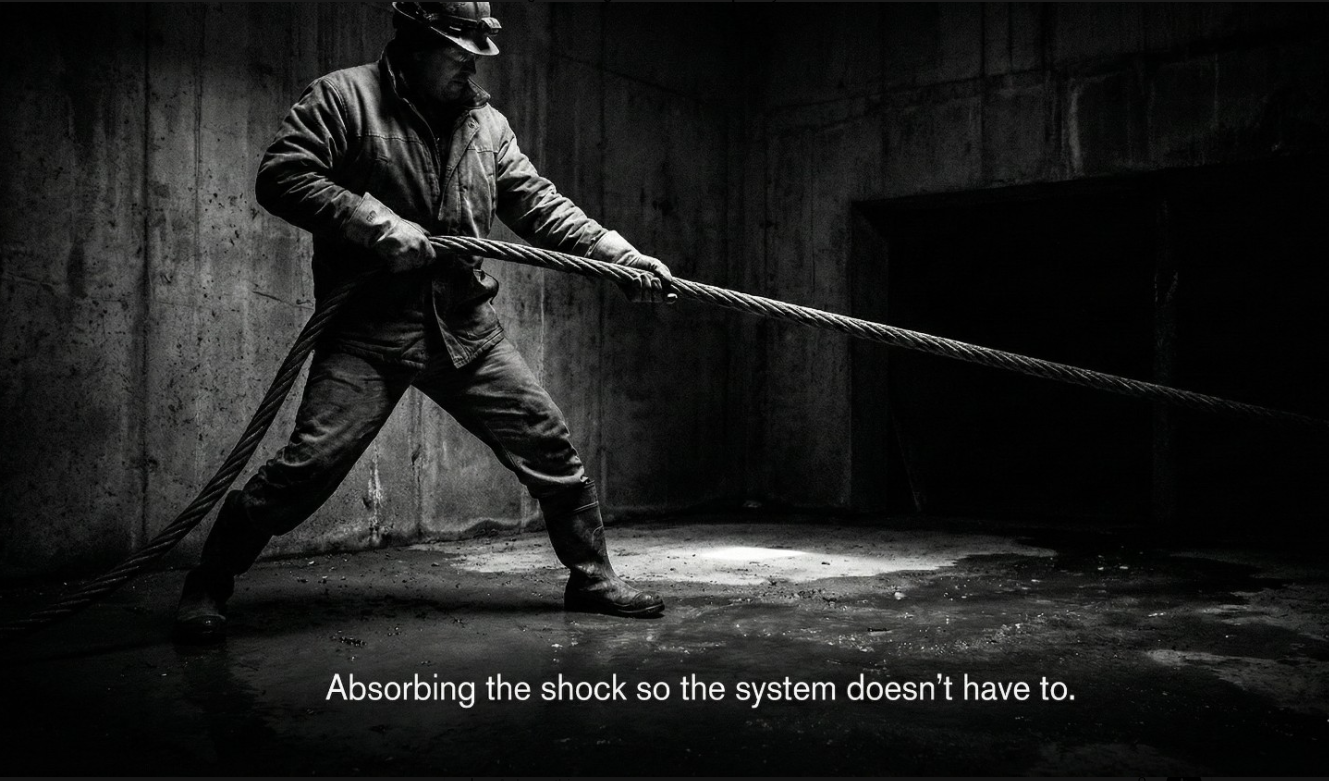
When to absorb shock personally so the system doesn’t have to
That discretionary effort is never written down.
And it is never guaranteed.
It’s offered conditionally.
The Unwritten Contract
Most operations teams operate under an unspoken agreement:
If we stretch when it matters, the system will recognize that difference.
Not with bonuses.
Not with praise every time.
But with fairness.
When that contract is broken—especially in moments where causality is murky—the response is not rebellion.
It’s withdrawal.
Punishment Under Ambiguity
Ambiguity is unavoidable in real systems.
Infrastructure degrades unevenly.
Failures inherit history.
Root causes blur across time, teams, and vendors.
When leadership responds to ambiguous outcomes with certainty and punishment, the lesson learned is not accountability.
The lesson is risk avoidance.
And risk avoidance has a predictable behavioral output:
Do exactly what is required. Nothing more.
4
Why Compliance Is So Appealing (and So Dangerous)
Compliance feels safe to leadership.
It’s measurable
It’s defensible
It looks disciplined
But compliance is a lagging indicator of system health.
A team that only complies will:
Follow process even when it’s clearly insufficient
Escalate early to protect themselves
Avoid initiative when outcomes are uncertain
Not because they don’t care—but because they’ve learned what caring costs.
The False Tradeoff: Discipline vs Resilience
Many organizations believe they must choose:
Either enforce discipline
Or tolerate mistakes
This is a false binary.
The real distinction is between:
Negligence, which deserves correction
Ambiguity, which demands learning
When those two are treated the same, resilience collapses quietly.
Teams don’t stop showing up.
They stop thinking.
What Gets Lost When Effort Is Trained Out
The loss isn’t immediate.
MTTR may hold—for a while.
Dashboards may remain green.
Escalations may even decrease.
What disappears first is judgment.
Then ownership.
Then initiative.
By the time leadership notices, the system has already hardened into something brittle—incapable of absorbing shock without breaking.
The Quietest Failure Mode
There is no alert for this.
No Sev 1.
No bridge call.
No postmortem.
Just a steady drift toward minimum viable performance.
And when the next crisis arrives—one that procedure alone cannot solve—leaders will ask the wrong question:
“Why didn’t anyone step up?”
The answer is uncomfortable, but consistent:
They did.
Once.
And they learned.