
Hidden costs·Telecommunications
Your Opex Problem May Have Started Ten Years Ago
Some operating expenses belong to the ordinary cost of running a system. Others are the recurring price of decisions made years earlier.
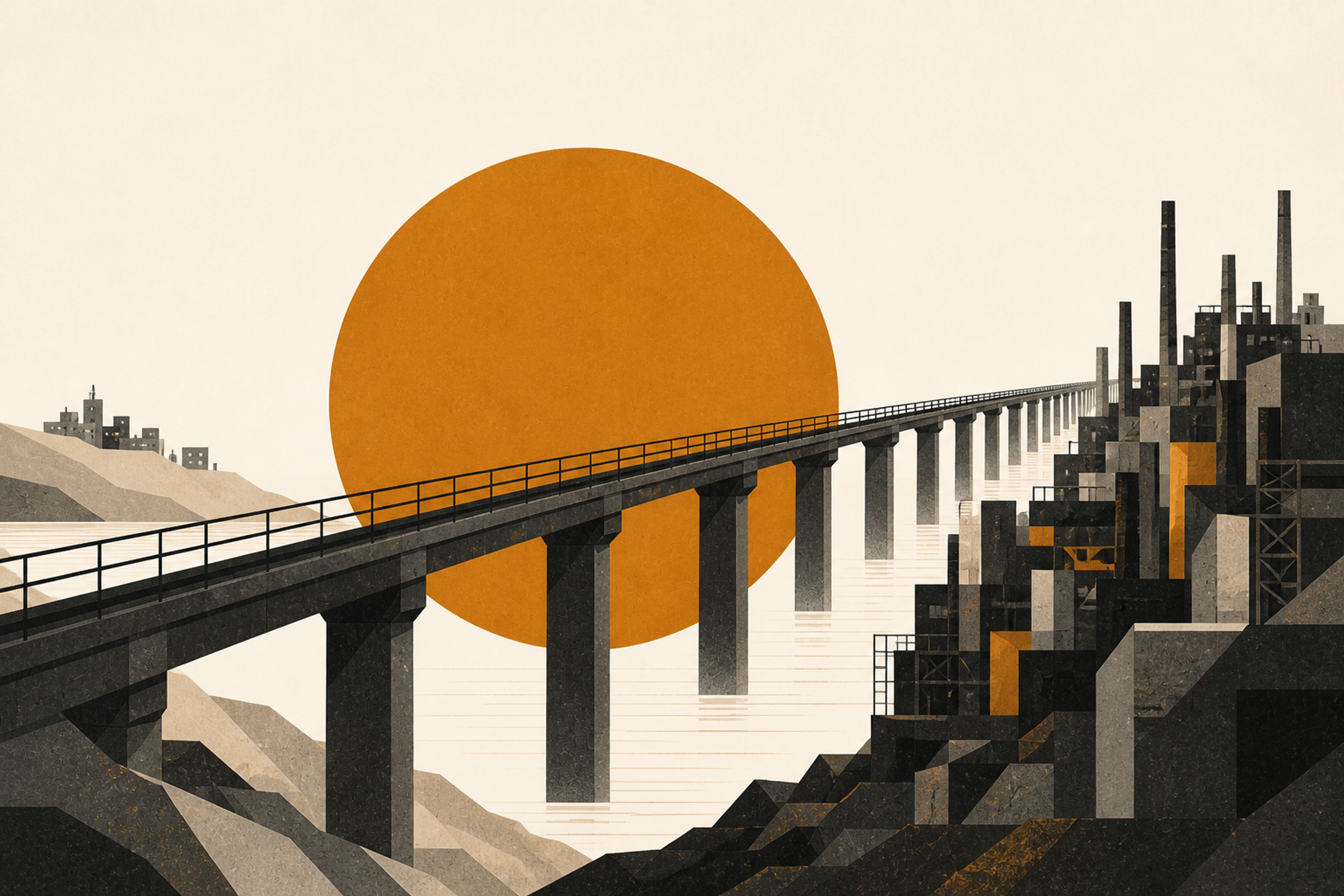
The signature of deferred decisions
Operating a physical system costs money. Networks require maintenance. Facilities require upkeep. Equipment requires inspection, repair and eventual replacement. People, tools, spares and support capacity all carry legitimate operating costs. A healthy operation should expect to pay them.
The more revealing question is why some operating costs persist above that expected baseline.
A recurring expense can appear in this year’s budget even though the condition producing it was created years earlier. Cost programs encounter the expense where it is visible: in a maintenance budget, a support contract, a recurring repair, an exception process or additional labor. That is where the variance has to be explained and where someone is expected to manage it. The originating decision may belong to another budget, another team and another period entirely.
This is how an operating cost can become detached from its cause. The expense looks current. The condition behind it may be much older.
The pattern is easiest to see in infrastructure-heavy operations — networks, plant, fleet, facilities — where the distance between a build decision and its operating consequence can run for years. A route is built to the standard that clears the immediate requirement. A site is commissioned with the power and access arrangements available at the time. A cutover is scheduled around a launch date rather than an ideal maintenance window. Each choice can be defensible when made. Each also establishes conditions that operations will eventually inherit.
The difficult cases are rarely the ones where something immediately breaks. The network carries traffic. The site stays up. The system does what it was asked to do. The consequence appears instead as effort: additional maintenance, recurring intervention, a workaround that has to be preserved, or a standing cost of keeping the system functioning in its actual condition.
Organizations are good at noticing things that stop. They are much weaker at noticing things that quietly become more expensive to continue.
Temporary fixes become permanent systems
Deferral often begins as a temporary measure, and temporary measures have a way of acquiring permanent operating structures.
A workaround is introduced to hold a service together until the proper repair can be scheduled. The repair is scheduled, then loses priority, then moves into a future program. Meanwhile the workaround acquires everything an established operating practice acquires: a procedure, a rota, a spares position, a monitoring exception and a small group of people who understand how it behaves.
Nobody needs to decide that the workaround should become permanent. Time can make that decision on the organization’s behalf. Eventually removing it requires its own funding, coordination and interruption, while continuing to operate it has become familiar.
Restoration and remediation need to remain distinct.
Restoration returns a service to working order. Remediation removes the condition that made the intervention necessary.
Restoration is immediate and visible. The outage ends. Service returns. The ticket closes. Remediation often operates on a different clock because the permanent work may require engineering, funding, access, permits, materials or a maintenance window that does not exist at the moment service is restored.
An operation can therefore become exceptionally good at restoration while accumulating conditions still awaiting remediation. Its competence is real. So is the growing population of things it has become very good at recovering from.
An organization that is excellent at restoration can defer remediation for a remarkably long time and look competent throughout.
Deferred work does not disappear when it leaves the immediate priority list. It changes form. A physical condition may require a standing instruction, recurring site visits, manual reconciliation, additional monitoring or institutional knowledge held by a handful of people. Those requirements become part of the operating model even though none existed in the intended design.
The same pattern appears when infrastructure was built to a condition that later proves expensive to sustain. Capacity, access, equipment placement, route selection, environmental protection or maintainability can all shape the amount of recurring intervention a system requires. The resulting work is real and legitimate. What makes it analytically interesting is that its volume may be partly explained by a decision made long before the operating budget inherited it.
Where the cost finally appears
Infrastructure debt rarely stays where it was created.
How a decision becomes a recurring operating cost
Decision
Built to clear the requirement in front of it
Time
Years pass. Nothing visibly fails.
Operating cost
The expense arrives in a different budget
A project decision may sit in one budget, close successfully and disappear into the historical record. Its operating consequence can surface elsewhere: in field maintenance, a support contract, repeated mobilization, additional monitoring or labor devoted to managing a persistent condition.
The cost has crossed an organizational boundary. The team carrying the condition may have had no role in creating it.
It may have crossed a financial boundary as well. Money once discussed in the context of construction, deployment or a project is now being discussed as the recurring cost of operating what was delivered.
Most importantly, it has crossed time.
The interval between decision and consequence can be long enough that the two no longer appear in the same conversation, belong to the same leaders or remain visible in the same system of record. What arrives in operations therefore looks like a current operating requirement rather than the continuation of an earlier decision.
The signals usually appear before the financial pattern becomes obvious: exception volumes that do not return to baseline, maintenance activity that becomes routine, a rising share of unplanned work, repeated interventions at the same assets, or procedures that exist only to accommodate particular conditions.
Operations experiences that burden as work before the organization understands it as cost.
The operating premium
Every system has a legitimate operating baseline. The useful comparison is between that expected cost and the additional burden created by the system’s actual condition.
That difference is the operating premium.
It can take many forms: additional truck rolls, repeated repairs, specialized support, more frequent inspection, manual reconciliation, unusual spares requirements, additional monitoring or labor that would not be required under a different physical or operating condition.
Calling this a premium does not make the expenditure unnecessary. Once the underlying condition exists, much of that spending may be essential. Cutting it without changing the condition can make the operation worse.
This is why some operating costs resist conventional cost programs.
Renegotiate the contract and the physical work may still be required. Reduce staffing and the exception population remains. Defer maintenance and the immediate expenditure may fall while the underlying exposure increases. A cost program can successfully reduce what is being spent without changing what the system requires.
The objective is not indiscriminate OpEx reduction. Routine maintenance, inspection, competent staffing, appropriate spares and preventive work are part of responsible ownership. Removing those costs simply because they appear in an operating budget can convert planned expenditure into future instability.
The harder work begins when a cost remains structurally elevated despite repeated attempts to manage it.
The line item is the consequence. The work is to identify the decision or condition that created it.
That investigation may reach backward across budgets, teams and years. It may uncover a temporary repair that became an operating practice, an access constraint accepted during construction, a capacity decision that later required constant intervention, or a project trade-off that was entirely reasonable given the information and priorities of its time.
The purpose is to recover the causal chain between the condition the organization owns today and the money required to sustain it.
Once that chain is visible, cost reduction becomes a different exercise. The organization can distinguish the expenditure required to operate the system responsibly from the premium created by conditions it may be able to change.
Without that distinction, the budget becomes the battleground and the physical system remains untouched.
The question that remains
If today’s operating premium was created by a decision made years ago, where should accountability for changing the underlying condition sit now?